
Atrial Fibrillation And Its Long-Term Consequences
Feeling your heart race or flutter unexpectedly can be unsettling—and for many, it’s a sign of atrial fibrillation.
This irregular heartbeat might come and go without warning, but its long-term effects can be far more persistent and dangerous. From blood clots to heart failure, atrial fibrillation is more than just a rhythm issue.
In this blog, we delve into the atrial fibrillation pathophysiology and examine its long-term effects on the heart, brain, and beyond.
What is atrial fibrillation?
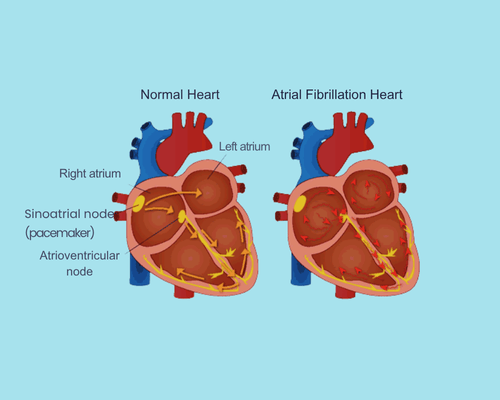
Atrial fibrillation (AFib) is the most common form of heart arrhythmia. An arrhythmia happens when the heart beats too slowly, too fast, or irregularly.
In AFib, the upper chambers of the heart (atria) beat irregularly, disrupting blood flow to the lower chambers (ventricles). This increases the risk of complications such as stroke, heart failure, and other heart-related complications.
What are the symptoms of atrial fibrillation?
Atrial fibrillation symptoms can differ widely among individuals—some may have no noticeable signs, while others experience significant discomfort.
Common atrial fibrillation symptoms include:
- Irregular or rapid heartbeat
- Fatigue or weakness, especially during physical activity
- Shortness of breath, even with little to no exertion
- Dizziness or lightheadedness
- Chest discomfort or pain
- Reduced ability to exercise or perform everyday activities
- Fainting or near-fainting spells (less common)
In some cases, atrial fibrillation may be detected only during a routine checkup, especially if the symptoms are mild or absent.
What are the causes and risk factors of atrial fibrillation?
Atrial fibrillation can stem from various underlying health conditions and lifestyle factors that affect the heart’s electrical system.
Common atrial fibrillation causes include:
- High blood pressure (hypertension)
- Coronary heart disease
- Heart valve disorders
- Previous heart attack or heart surgery
- Congenital heart defects
- Inflammation of the heart
- Lung diseases, including pneumonia
In addition to direct causes, several risk factors increase the likelihood of developing atrial fibrillation:
- Advancing age, especially over 60
- Obesity
- Diabetes
- Sleep apnea
- Thyroid disorders, particularly hyperthyroidism
- Heavy alcohol use or binge drinking
- Smoking
- Family history of AFib
- Stress or chronic illness
What are the long-term complications of atrial fibrillation?
1. Stroke
Stroke is one of the most serious long-term complications of atrial fibrillation. The irregular heartbeat allows blood to pool in the atria, increasing the chance of clot formation.
If a clot reaches the brain, it can block blood flow, causing an ischemic stroke.
2. Heart failure
Over time, AFib can weaken the heart muscle, especially if the heart rate remains uncontrolled.
This may result in heart failure, a condition where the heart cannot pump blood efficiently to meet the body’s needs.
3. Cognitive decline and dementia
There is growing evidence linking AFib and cognitive decline, including a higher risk of dementia, such as Alzheimer’s disease.
This may be due to reduced brain blood flow, silent (unnoticed) strokes, or chronic inflammation.
4. Cardiomyopathy
Prolonged episodes of atrial fibrillation, especially when accompanied by a rapid heart rate, can lead to tachycardia-induced cardiomyopathy.
This is a type of heart muscle disease caused by sustained high heart rates, resulting in a weakened and enlarged heart. Fortunately, this condition is often reversible with proper treatment.
5. Blood clots in other organs
In addition to the brain, blood clots from the atria can travel to other parts of the body, such as the lungs
These embolisms can lead to serious complications like organ damage or infarction.
underlying health conditions and lifestyle factors that affect the heart’s electrical system.
How is atrial fibrillation diagnosed?
AFib often goes undetected and may only be discovered during a routine health checkup for another issue.
To diagnose AFib, healthcare providers review your medical history, review symptoms, and conduct a physical exam. They may also perform tests to identify underlying causes of irregular heartbeats, such as heart disease or thyroid disorders.
One of the most important diagnostic tools is the ECG, which records the heart’s electrical activity and helps detect abnormal rhythms.
Additional tests that may be used include:
- Blood tests to check for underlying causes
- Holter monitor for continuous heart rhythm monitoring over 24–48 hours
- Implantable loop recorder for long-term monitoring
- Echocardiogram to assess heart structure and function
- An exercise stress test to evaluate heart performance during activity
- Chest X-ray to identify other heart or lung conditions
Can atrial fibrillation be cured?
AFib may not always be permanently cured, but it can be effectively managed with the right treatment. The goal of treatment is to control the heart rate or rhythm, reduce symptoms, and prevent complications like stroke.
In some cases, especially when AFib is caused by a reversible condition, it can be resolved. For others, long-term management is necessary.
Common atrial fibrillation treatment options include:
- Medications to control heart rate or rhythm and prevent blood clots
- Cardioversion, a procedure that delivers electrical shock to the heart to restore normal rhythm
- Catheter ablation, which targets and destroys the heart tissue causing irregular signals
- Lifestyle changes, such as managing stress, avoiding alcohol, and treating sleep apnea
- Surgical procedures in severe or persistent cases
Contact Dr Tamkeen Kinah for atrial fibrillation treatment in Dubai
Dr Tamkeen Kinah, a leading Consultant Cardiologist & Heart Specialist in Dubai, offers advanced, patient-centered care with expertise in Clinical and Preventive Cardiovascular Medicine.
Whether you need a precise diagnosis, a personalised treatment plan, or long-term management of atrial fibrillation, Dr Tamkeen is committed to helping you live a healthier, heart-safe life.
Some MUST-KNOW FAQ's
Atrial fibrillation causes irregular heartbeats, which may cause blood to pool in the heart and form clots. If a clot reaches the brain, it can trigger a stroke. The risk of stroke due to AFib increases notably with age.
In many cases, atrial fibrillation is a chronic condition that requires long-term management. While some people may experience occasional or short-term episodes, others may need ongoing treatment to control symptoms and reduce the risk of complications.
Managing atrial fibrillation involves a combination of medications, lifestyle changes, and medical procedures. Controlling blood pressure, avoiding triggers like caffeine or alcohol, and following a heart-healthy diet can help reduce symptoms and improve heart rhythm stability.
Atrial fibrillation primarily affects the heart, disrupting its normal rhythm and function. However, it can also impact the brain due to increased stroke risk and affect other organs by reducing blood flow and oxygen delivery throughout the body.
Atrial fibrillation life expectancy depends on overall health, timely diagnosis, and effective treatment. With proper management, many individuals live full, active lives. However, untreated AFib increases the risk of stroke and heart failure, which can shorten life expectancy.